It usually starts small. You open your sliding glass door, but it gets stuck. You brush it off, thinking it’s just dust, or perhaps you pushed at the wrong angle. But a week later, it takes both hands. After some time, you’re practically bracing your foot against the wall just to get it to move. That’s when most people finally stop and think, something’s wrong here.
You wouldn’t believe how common this is. I’ve been working on glass doors for years now, and if I had a dollar for every homeowner who said, “It used to slide so easily,” I’d probably never need to fix another one. People need to know that sliding doors don’t usually fail overnight. They wear out in the background until you wake up one day and realize that effortless glide is not there anymore.
1. Faulty Rollers
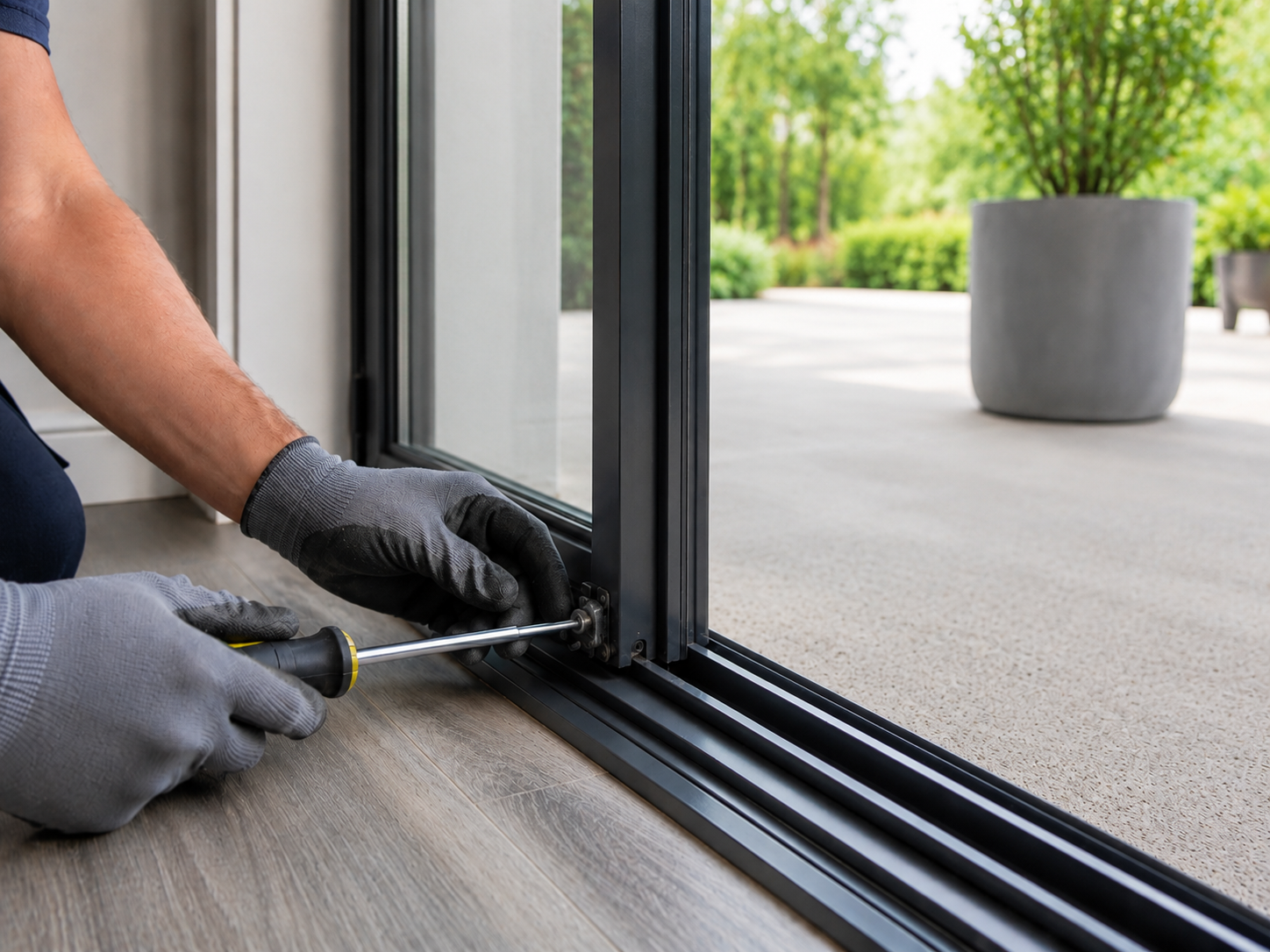
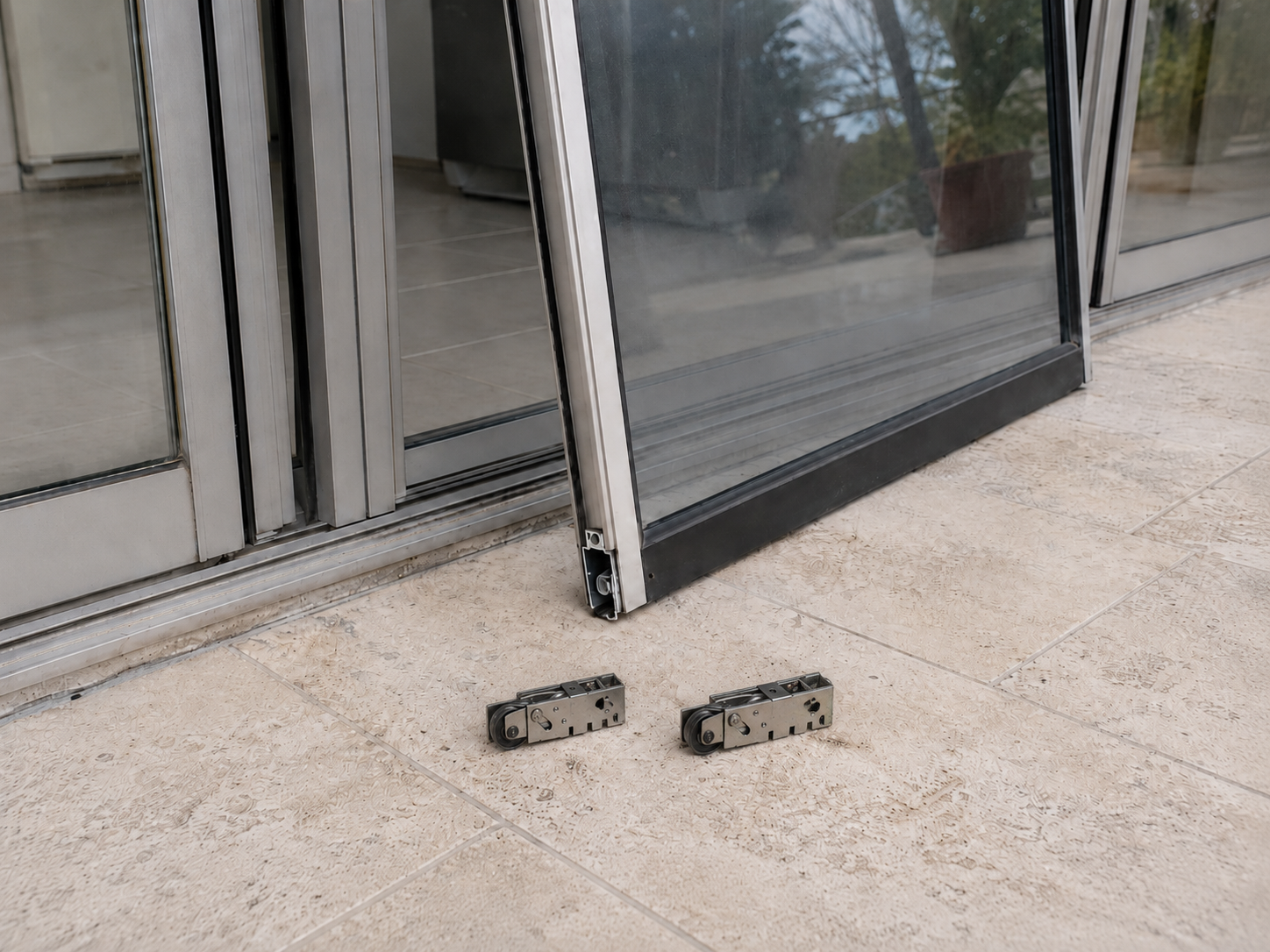
You know that smooth glide your sliding glass door used to have? That effortless push, the quiet slide? That’s all thanks to a few small rollers hiding underneath, tiny wheels that carry all that glass weight without complaint. But over time, they start to give in. It doesn’t happen overnight. It’s a slow buildup that happens after years of use.
The fix isn’t complicated, but it takes the right touch. Once those rollers are replaced, it’s like the door remembers what it was built to do. You slide it open and there’s this quiet, easy motion again, no scraping, no grinding, just smooth movement.
2. Dirty Tracks
Now, let’s talk about that narrow strip of metal or vinyl the door rides on, the track. Think of it as the path your door travels every single day. Day by day, it becomes a repository of dirt, sand, pet hair, crumbs, bits of dried leaves, and all other detritus. A lot of things end up right there.
It doesn’t take long before that track starts fighting back. You hear crunching, feel resistance, maybe even notice the door bumping like it’s rolling over small rocks. That’s not your imagination. Those bits of grit literally grind into the metal every time you open the door.
Vacuuming won’t do much if the track has already been damaged. One of the things I always tell homeowners to do is to clean the track, even when it looks fine. It’s one of those tiny habits that saves you hundreds down the road.
3. Shifting Frames
Here’s the thing about houses, they’re alive in a way. They expand, contract, and settle over time. It’s not enough to notice with the naked eye, but doors feel it. Even a millimeter’s shift in the frame can make a sliding glass door rub, stick, or drag.
I’ve seen perfectly installed doors turn stubborn just because the floor settled slightly or the house flexed during a humid summer. Most people assume the door’s warped, but it’s really the structure around it.
When I see this, I don’t rush to replace parts. I check the alignment, the balance, and sometimes even the foundation. Because once the frame’s corrected, the whole door suddenly behaves again. It’s a quiet fix, but it makes all the difference.
4. The Weather
The truth is Florida’s weather never takes a break. The air is always loaded with salt and moisture that slowly finds its way into everything, including hinges, frames, even the tiny screws holding your door together. You don’t see the damage at first. It just builds, little by little.
One season, the door glides like silk. Then the next, it feels heavier, a little stubborn, maybe squeaks when the heat settles in. You think it’s age, but it’s not. It’s the air itself. That mix of humidity and salt works its way into the rollers, turning them rough, leaving faint streaks of corrosion that spread like rust freckles.
If your home’s near the coast, you’ll notice it sooner. That fine white dust that gathers on your railing or windows? That’s salt, and it’s already working on your sliding door too. It creeps into the metal, dries out the seals, and before you know it, your easy-gliding door starts dragging like it’s tired.
The fix isn’t complicated and putting silicone lubricant on tracks after wiping them clean can make a huge difference.
5. Rust and Corrosion
Rust doesn’t show up overnight. It sneaks in, a little orange spot here, a tiny bump there. Before long, that small patch becomes a rough surface that catches the rollers each time they pass. And when that happens, you feel it, that sudden hitch in the middle of the slide.
Corrosion weakens the hardware, too. Latches stop lining up, handles start to loosen, and the door just feels off. I’ve seen people replace rollers three times before realizing the real issue was hidden rust along the lower frame.
If you catch it early, it’s easy to manage, a bit of cleaning, some protective spray, and regular upkeep. But once corrosion takes hold, it spreads quietly. And at that point, you’re looking at part replacements, not just a quick touch-up.
6. The Lock
I can’t count how many times I’ve been to customers’ homes for a “stuck” sliding door only to find out that the lock was the culprit. As funny as it sounds, it happens all the time.
When latches don’t align properly or the locking mechanism sticks, the door won’t budge, regardless of how much force you put into it. It feels like the rollers are jammed, but it’s just the lock being stubborn.
A few things you can do is tighten a screw or realign the strike plate. Other times, replacing the latch is necessary. No matter the reason, it’s one of those small problems that makes a big difference once fixed.
7. Time
No matter how well a door’s built, time has the final say. The seals dry out, screws loosen, and tiny gaps start to form. It’s not neglect, it’s just life.
I’ve worked on doors that were installed twenty years ago and still had good bones. They just needed care. A few new rollers, a cleaned track, a couple of adjustments, and they were back to sliding like they did in their first year.
You’d be surprised how many people assume they need a full replacement when really, their door just needs attention. Watching their faces light up when it glides effortlessly again, that’s one of the best parts of this job.
Knowing When to Call for Help
If you’ve tried everything, cleaning, vacuuming, even a bit of lubricant, and the door still feels like a fight, that’s when it’s time to call in someone who does this for a living. Because fixing it properly isn’t just about making it move today; it’s about finding out why it stopped moving in the first place.
At Aluminum Glass Pro Systems, that’s exactly what we do. We don’t just replace parts at random. We look at the full picture, the track, the frame, the rollers, the lock, the weather damage, and fix what’s really causing the problem. That way, your door keeps sliding smoothly for years, not months.
Sliding Glass Door Repair That Brings Back That Effortless Glide
Here’s the truth most people don’t realize, fixing sliding doors don’t take much. A few slight adjustments can bring sliding doors back to life. The real problem is, most folks get used to pushing harder, tugging a little, and thinking, “I’ll get to it later.” Then one day, the door barely moves at all. That’s when you call the professionals to take a look.
You can reach us at (813) 705-0953. We’ll check everything from top to bottom and set things right. When we’re done, that door will glide like it did the day it was first installed, quiet, light, and effortless again.
It’s a small fix, but it changes how your whole space feels. Sometimes that’s all it takes.